Written by Al Huebner
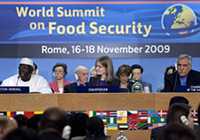
The Winter 2009 issue of Food First News reports that last November the World Summit on Food Security in Rome issued a declaration that the world is now hungrier than ever before. Significantly, this is not the result of food shortage, with world production at 11/2 times that needed to feed every man, woman, and child on the planet.
The root cause of this insecurity is the food system itself, which is controlled by a handful of global monopolies. In fact, the crisis comes at a time of record global profits for the world's agri-food corporations. Archer Daniel Midland, Cargill, Monsanto, General Foods, and Wal-Mart all posted profit increases in 2008 of 20% to 86%. For Mosaic, a fertilizer subsidy of Cargill, profits increased by a stunning 1200%.
The World Food Summit did nothing to confront the hunger crisis. The lack of any political will in Rome was so low that not one head of state from a G-8 country showed up (except for Italian Prime Minister Silvio Berlusconi, who of course lives there). With a shocking lack of commitment the G-8 representatives decided to drop the goal of ending world hunger. Now the rich countries need only work to halve hunger by 2015.
In a situation with many parallels, in November the US Department of Agriculture reported an alarming increase in food insecurity in the US; one in seven Americans don't get enough food throughout the year. The USDA report refers to household food shortages, yet in the US, as in the world, there is no food shortage. An obvious question comes up: why, in the most productive farming country in the world, do we have so many hungry people? The answer is that families simply don't have enough money to buy the food they need.
The reasons for this aren't hard to find. The nation's food workers make up 18% of all workers in the US. But those who pick, process, pack, and serve our food are the lowest paid of any industry. This is analogous to the global situation, where most of the world's hungry are poor farmers. In both cases women and children suffer the most.
While more than 1 billion people in poor countries aren't sure where their next meal is coming from, many chronically food-insecure countries are selling their land, as Raphael Grojnowski reports in the same issue of Food First News. Sudan, Ethiopia, and Cambodia, for example, have already sold nearly 40 million hectares of their best agricultural land to foreign investors, mainly from the Middle East, China, and South Korea. This is a classic imperialist land grab that, like those familiar from the past, leads to a steady deterioration of the condition of human beings, not to mention degradation of the environment.
Spurred by the global food-price crisis and supply shortages in the volatile world food market, wealthy but food-deficient countries are buying up vast tracts of land, especially in Africa. There they expect to grow food and fuel long distance. Promising new technologies and employment to some of the world's most neglected areas has many poor governments rushing to attract these new investments.
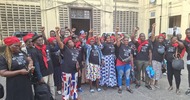
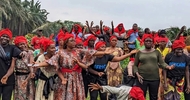
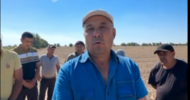
These land deals are negotiated in total secrecy and are having devastating effects on local farmers and their families. To make room for the new foreign mega-farms, small farmers are being dispossessed of their land. In their place, huge monoculture plantations to feed foreign consumers are being established, using industrial farming techniques that have extremely damaging environmental effects, such as chemical contamination of rural water supplies.
While many peasant organizations are relentlessly drawing attention to this devastating land-grabbing, the UN and other agencies have been characteristically slow to act. At last year's World Food Summit three UN agencies and the World Bank finally announced plans to draft a code of conduct for such "foreign land acquisitions." But the proposed guidelines are only a non-binding and voluntary code. Worse yet, its implementation is scheduled for late 2010, leaving investors another year to make secret deals for prime agricultural real estate overseas.