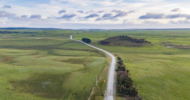
Late on Wednesday night an Australian trust backed by Swiss, Danish and US fund managers agreed to pay more than $200 million for 12,000 hectares of almond groves in northern Victoria.
- Financial Review
-
15 November 2013
Swedish, Norwegian and Dutch investors in Mozambique land grab: powerful new documentary gives a compelling visual portrait of how investment by private financial players can undermine food security and human rights in developing countries.
As the world’s population swells beyond seven billion and emerging markets’ appetite for food grows, Canadian institutions are getting increasingly hungry for agribusiness and farmland acquisitions abroad.
- Financial Post
-
26 September 2013
Food companies in the North have always purchased land in the global South to produce export crops. What is different today is the unprecedented scale of these purchases and the kinds of crops that are being grown.
- Ethics & International Affairs
-
19 September 2013
The returns on investments in South African farmland consistently outstrip those of local and international equities, bonds and real estate, says Futuregrowth Asset Management, the venture capital arm of Old Mutual.
- Financial Mail
-
30 August 2013
Australia's Murray Goulburn Co-operative says it plans to bypass traditional bank lending by forging alliances with international investors to support dairy farms.
- Weekly Times Now
-
26 August 2013
Land reform movements, organizations of indigenous peoples, small farmers, and other citizens are responding to the increased sacking of land and other natural resources throughout the global South.
Among the estimated 3.7 million workers in the industry are thousands of child laborers and workers who face dangerous and abusive conditions. Debt bondage is common, and traffickers who prey on victims face few, if any, sanctions from business or government officials.
Black River Asset Management, owned by food giant Cargill, is targeting $400m for its 2nd ag-focused investment fund. So far, the bulk of the financing has come from a US teachers' pension fund.
European banks, pension funds and private equity funds have given financial assistance worth more than €450 million to Malaysian palm oil giant Sime Darby, responsible for environmental degradation and violations of national regulations in Liberia.
While NGO pressure has had some impact on speculative investments in agricultural commodities, financial institutions still seem to be very attached to their farmland investments.
- Triple Crisis
-
11 June 2013
Farmland has become the darling of alternative investing, sending hedge funds and wealthy investors into bidding wars for plots of land once deemed ordinary. And it is not just big money getting in on the game. From Stockholm to Chicago to Vancouver, ordinary investor money is pouring into fields around the world.
A Chinese company isn’t buying Smithfield. A shell company based in Cayman Islands is. Instead of a story about “China buying up the world”, this turns out to be a story of a precarious leveraged buyout deal by some large global private equity firms looking to borrow their way to a fortune.
Dutch pension funds say they will remain invested in Wilmar International due to their successful efforts to engage with the controversial palm-oil company accused by many of land grabbing
A multi-million dollar “ethical” plantation development in northwestern Mozambique - the initiative of a clutch of Scandinavian faith-based organizations - has faced alleged acts of sabotage by the very people it was designed to assist, illustrating the divisions between foreign benefactors and local communities.
Friends of the Earth is running an ethical pension campaign to encourage investors to ask their providers if they invest in land grabbing activities. Emma Websdale spoke with campaigner Kirtana Chandrasekaran to discuss why it is such an important issue.
- Blue & Green Tomorrow
-
22 April 2013
Sweden’s SEK227.3bn (€26.7bn) state buffer fund Andra AP-fonden (AP2) has been accused of a lack of transparency and snapping up cheap agricultural land in Brazil by campaign group Swedwatch. AP2 denies the allegations.
- Responsible Investor
-
22 April 2013
A new Swedwatch report shows a lack of transparency and inadequate auditing of ethics and environmental impacts in AP2’s investment in farmland in Brazil. For business reasons, the investment is surrounded by a high level of secrecy, which makes scrutiny from the outside impossible.
The Foreign Investment in Real Property Tax Act was first passed in 1980 by Congress to limit foreign control over US farmland. Obama now wants things changed.
- Costar Group
-
03 April 2013
BRICS states, except Russia, are enhancing and facilitating land grabs abroad in a way that is inconsistent with their proclamations of sustainable development, cooperation solidarity, and respect of national sovereignty.
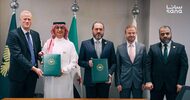
A consortium of Saudi groups - comprising dairy giant Almarai, grain importer Al Rajhi and Salic, the agriculture arm of the country's Public Investment Fund sovereign wealth fund – buys Continental Farmers Group, which has large farming operations in Poland and the Ukraine.
In New Zealand, an opposition party is demanding hard figures on how much farmland is owned by foreigners, but the government says it can't produce the figures.
Norway’s US$710bn sovereign investment fund has pulled its investment from 23 Southeast Asian palm oil companies, claiming that they source palm oil unsustainably.
- Food Navigator
-
12 Mar 2013
The UK's Environmental Agency Pension Fund is still seeking a manager for a £245m ‘real asset' mandate, set to include £65m in forestry and farmland.
- Professional Pensions
-
11 Mar 2013
The 16,000-hectare farm which Första AP-fonden bought in Australia in December was one of a clutch of purchases of farmland, worth some $100m, by the pension fund.
Mark Wiseman, chief executive of the $A170 billion fund, will visit Australia this month amid the group’s expanding portfolio of interests across the Tasman.
Land grabs in Canada have not been well-documented. Provinces do not keep inventory on large-scale land acquisitions. This blind eye approach has some people, particularly farmers, worried.
- Watershed Sentinel
-
07 Mar 2013
Major asset managers, cowed by the cost, the risk and the controversy involved in investing in farmland, are joining forces to increase investment in the historically under-capitalised sector.
There's been considerable disquiet over the presence of foreign buyers in the farmland market place, but the stats on the extent of foreign ownership and the emerging trends are far from clear.
As PrimeAg Australia's $125 million sale of rural properties to US fund manager TIAA-CREF goes through, the question now being raised by investors is what will happen to the residual portfolio.
- The Land
-
18 February 2013