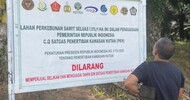
In the past three days, peasants, pastoralists and indigenous peoples have come together from across the world for the first time to share with each other their experiences and struggles against land-grabbing.
- Via Campesina
-
23 November 2011
It’s obvious that pension funds and other big-money managers are ‘getting’ the agri-land investment story.
- WorldCrops.com
-
16 November 2011
PensionDanmark har investeret over en halv milliard i afrikansk landsbrugsjord. Pensionsselsskabet forudser, at Afrika bliver den næste store vækstregion.
Corporate agriculture is not about food production or satisfying the needs of the undernourished or downright starving but about producing profit. How long can it be before its limits are reached?
- worldsocialism.org
-
11 November 2011
Pension funds and other corporate owners have spent only a tiny fraction of the billions of dollars they could invest in farmland, but they are definitely kicking the tires on potential purchases.
There is a lot of focus on the growing global population and what it means for food demand. One result sees investors taking notice of returns on resources that provide food, including farmland.
- Wallaces Farmer
-
21 October 2011
Report by HighQuest Partners for the OECD, October 2011, features 6 case studies of land grabbers: Agrica, CalyxAgro, Cazanae, Jantzen, NFD Agro and Quifel
Roger Ferguson, chief executive of TIAA-CREF, says his firm is increasingly acquiring farmland in the US, Eastern Europe, Australia and Brazil as long term investments.
Asset owners and managers are signing up to a series of principles on how they invest in agricultural land. Will this mollify critics of the land grab? Nick Lord reports.
- Euromoney
-
06 October 2011
In Brazil, government surveys found foreigners owned 10% of the nation's cultivated land. Much of that was funds with international backing in London or New York.
- Progressive Farmer
-
04 October 2011
CDC, the UK’s development finance institution, today announced a US$20m investment in farming businesses in Zambia, Tanzania, Malawi, Mozambique and Uganda
Unfortunately, given the global nature of capital, even if the US were to completely shut down speculation, it would just move offshore.
- AlterNet
-
23 September 2011
Farmland is an increasingly attractive investment for pension funds, but some have held back from buying due to ethical and environmental concerns, and a fear of negative public perception.
- Samachar
-
18 September 2011
The idea of combining the greed of investors with the fight against hunger as a mutually beneficial business venture has failed miserably
- Der Spiegel
-
01 September 2011
The $23.6 billion Iowa Public Employees’ Retirement System and the $600 million Tucson Supplemental Retirement System are currently exploring potential investments in farmland as a means of diversification.
- Farmland Forecast
-
31 August 2011
Fear of unrest and hunger for profit are sparking massive acquisitions of farmland.
- In These Times
-
22 August 2011
Agricultural analyst at Citi Investment Research, Tim Mitchell, recently calculated that "rural raiders" from overseas had spent "well in excess of $12 billion" over the past four years on Australian agribusinesses and farms.
Farmers have urged the state government to establish a register that would list Victorian farms that have been bought by foreign owners. The call comes as concerns grow over the level of foreign ownership of Australian farms and over the control of productive food resources.
Who has not recently heard a radio advertisement from one investment fund or another extolling the virtues of agricultural investments in Argentina or the Ukraine?
Australians do realise the value of what is being sold, a land agent and rural property specialist said, "but their hands are tied because they can't raise the money".
Pambazuka News spoke to Anuradha Mittal, Jeff Furman and Frederic Mousseau about what prompted their research on large-scale investments in land in Africa and what they discovered.
African farmers do need investment and support. They desperately need decent roads and access to local markets, processing equipment to add value to their own diverse farm produce, storage and drying facilities to prevent post-harvest losses, and basic amenities such as schools and health centres and water wells to improve rural lives, so that farming communities can thrive. But foreign investors are not in business to provide any of these things.
UK-based SilverStreet Capital has received about $198 million in commitments to its Africa-focused fund from the Danish pension fund Pensionskassernes Administration (PKA) and the Overseas Private Investment Corporation (OPIC).
- Private Equity Africa
-
01 July 2011
Les fonds de pension sont peut-être l’une des rares catégories d’accapareurs de terres auxquelles les gens peuvent couper l’herbe sous le pied, pour la bonne et simple raison que c’est de leur argent qu’il s’agit.
Los fondos de pensiones pueden ser uno de los pocos tipos de acaparadores de tierras que los trabajadores pueden desbaratar, por el sólo hecho que ellos son los dueños del dinero
Japanese translation of article of GRAIN, "Pension funds: key players in the global farmland grab"
As controversy continues to bubble in Australia over the latest big local farmland buy-up and what it means for food production, it’s worth looking to see where these foreign raiders are coming from, who’s backing them and how other countries are tightening their regulations to stop them.
Pension funds may be one of the few classes of land grabbers that people can pull the plug on, by sheer virtue of the fact that it is their money.
Some pension funds are beginning to question their investments in commodities after accusations that massive flows into the sector have distorted markets, fuelled food inflation and hurt poor nations.
Denmark's PKA has invested DKK250m (€33.5m) in African agriculture via the Silverland private equity fund (a SilvertStreet Capital fund)