Rappler| 29 July 2025
Marcos woos local, foreign businesses: Invest in Philippine agriculture
by Iya Gozum, Tatiana Maligro
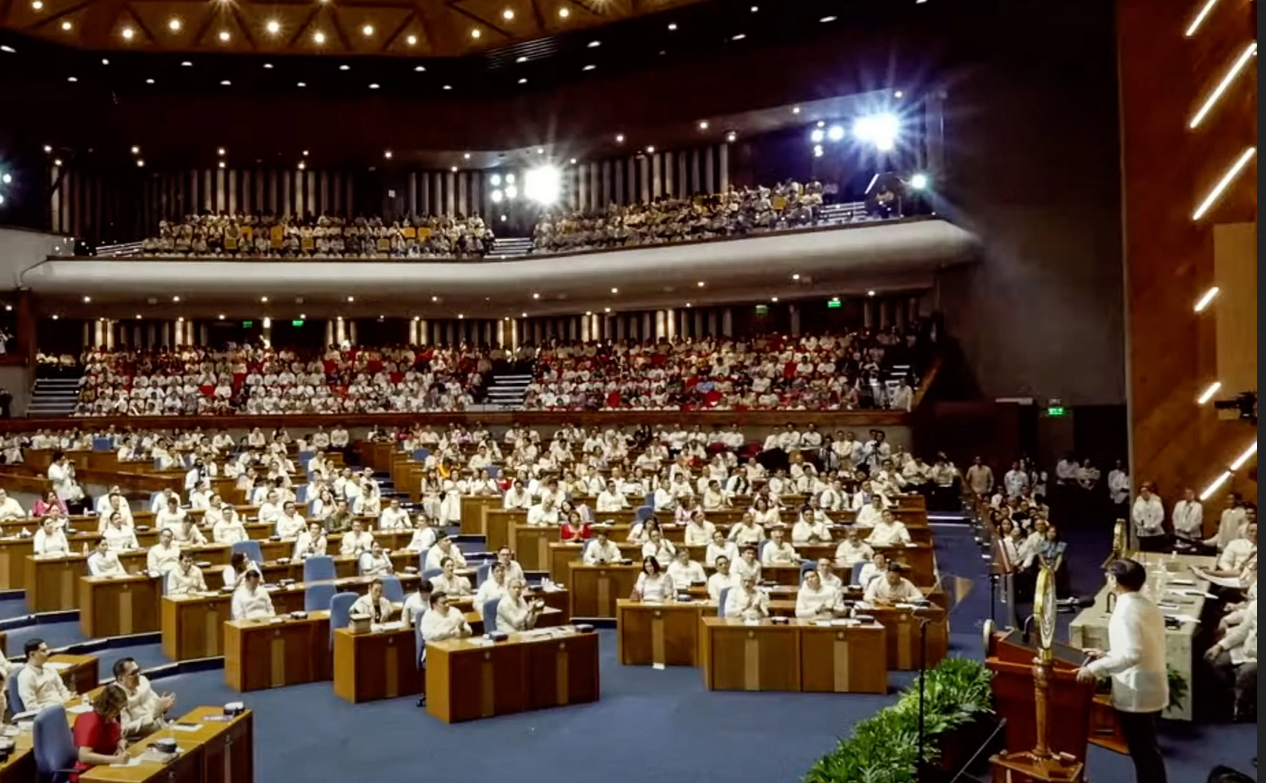 Investments in agriculture, forestry, and fisheries dropped an average of 6% yearly from 2017 to 2022, according to the Philippine Development PlanPresident Ferdinand Marcos Jr. made a special plea to local and foreign investors in his fourth State of the Nation Address (SONA): Invest in the country’s agriculture sector.
Marcos encouraged investments in automobile manufacturing, construction, textile industry, among others, before putting an emphasis on agriculture.
“Ngunit nananawagan pa rin ako sa ating mga negosyante: mamuhunan kayo sa ating agrikultura. (But I’m still I calling on our businessmen, invest in our agriculture),” said Marcos on Monday, July 28. The President then extended the invitation to the international business community, saying “the Philippines is ready.”
Agriculture Secretary Francisco Tiu Laurel Jr. has repeatedly pointed out the years-long neglect of the sector in terms of infrastructure and mechanization.
Investments in agriculture, forestry, and fisheries dropped an average of 6% yearly from 2017 to 2022, according to the Philippine Development Plan.
Challenges such as logistics cost, land ownership issues, and non-compliance to international standards contribute to low investor confidence. Weak implementation of policies further aggravate this problem.
Following his plea to the private sector, Marcos emphasized the support the government is providing the sector: continued subsidy for cheap rice, amendments to the coconut trust fund law, pending inoculation of hogs against African swine fever, seed development, among others.
Agribusiness potential
A recent report from the World Bank found that the Philippine agriculture sector employs around 22% of the workforce, but remains the least productive sector and contributes the least to gross domestic product (GDP) growth.
The agriculture and fisheries industry contracted for three consecutive quarters in 2024 amid the El Niño and consecutive tropical cyclones. While the sector rebounded in the first quarter with 2.2% growth, it only contributed 0.2% to the 5.4% GDP.
Despite this, the World bank noted that agribusiness activities have shown potential in the export market, with brands such as Malagos chocolate and Vita Coco exporting value-added agricultural products to high-value markets.
Since 2005, agribusiness activities have been growing 5.2% and contributed $6.4 billion in exports in 2023. To further tap into the agricultural sector’s potential, the World Bank urged the Philippines to address factors limiting productivity such as limited farm-to-market connectivity and “misaligned incentives.”
“Land tenure security, infrastructure, and climate resilience can increase efficiency and sustainability,” it wrote.
Land tenure continues to be a struggle for many smallholder farmers. In his SONA, Marcos said the Department of Agrarian Reform is expediting the distribution of certificates of land ownership awards and condonation of beneficiaries’ debts.
Agrarian reform has been criticized for redistributing small parcels of lands, when scaled food production requires clustered farmlands.
For the World Bank, the land retention limits of five hectares per owner has limited the agriculture sector’s output by stalling the exit of underperforming producers.
Although these restrictions aim to prevent the concentration of land ownership, solutions such as cooperatives and joint ventures can help boost productivity while preserving rural communities’ source of income.
“The Department of Agriculture and [local government units] can unlock scale by streamlining support for cooperative formation, simplifying joint venture processes, and actively promoting models that lower entry barriers for commercial partnerships,” it wrote.