 News Ghana | 9 September 2025
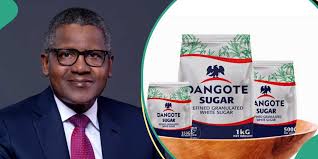
Dangote plans Ghana sugar factory to cut import costs
Africa’s largest industrial conglomerate announced plans to establish a sugar refinery in Ghana that could significantly reduce the country’s $162 million annual sugar import bill while creating thousands of jobs across West Africa.
The Dangote Group revealed the advanced project details during the ongoing Intra-African Trade Fair in Algiers, with Group Chief Branding and Communications Officer Anthony Chiejina positioning the facility as part of broader African industrial integration under the Continental Free Trade Area framework.
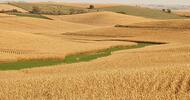
The sugar refinery will be located in Kwame-Danso in Ghana’s Bono Region, with a daily sugarcane crushing capacity of 12,000 tons and a 25,000-hectare irrigated farmland operation designed to support sustainable local production.
Speaking at the company’s dedicated pavilion during “Dangote Day” at IATF, Chiejina emphasized Ghana’s strategic importance in the group’s West African expansion. With feasibility studies completed and stakeholder consultations underway, the project represents a major industrial investment in Ghana’s agricultural processing sector.
The refinery will include production lines for sugar, molasses, and ethanol, backed by Ghana’s One District, One Factory initiative, demonstrating alignment between private investment and government industrial policy objectives.
The announcement comes as Dangote Sugar Refinery reported a 74.3% revenue surge to N213.9 billion ($133.21 million) in the quarter ending March 31, 2025, up from N122.73 billion ($76.41 million) a year earlier, indicating strong performance in the group’s existing sugar operations.
For Ghana, the facility addresses import dependency that currently requires $162 million annually for sugar purchases from international markets. The domestic production capacity could reduce foreign exchange outflows while creating employment opportunities across farming, processing, and logistics sectors.
The project aligns with IATF’s broader agenda of accelerating intra-African trade and industrial self-reliance. The current trade fair is generating deals projected to exceed $44 billion, with the Dangote sugar venture representing a significant component of pan-African industrial investment.
Economic policymakers have welcomed the initiative as addressing structural challenges in Ghana’s import-dependent agricultural processing sector. The facility is expected to leverage Ghana’s fertile agricultural zones and existing trade infrastructure while serving as a regional export hub.
Former Nigerian President Olusegun Obasanjo, Chair of the IATF Advisory Council, described the move as a “transformational step” toward Africa’s economic sovereignty. His endorsement reflects broader support for industrial projects that reduce continental dependence on external suppliers.
The Dangote Group’s presence at IATF has highlighted its expanding pan-African investment strategy, with showcases of cement, fertilizer, and refinery projects demonstrating the company’s commitment to continental industrial development beyond its Nigerian base.
For rural Ghana, the sugar project promises economic transformation through agricultural job creation and improved income opportunities for farming communities. The irrigation system component addresses water management challenges that have historically limited agricultural productivity in the region.
Dangote Group expects revenues to grow to over $30 billion next year from $25 billion forecasted for 2025, with the Ghana sugar facility contributing to this expansion trajectory alongside existing operations across Africa.
The timing coincides with increased focus on value-added agricultural processing across Africa as governments seek to move beyond raw commodity exports. Sugar production represents a strategic sector for import substitution and regional trade development.
Industry analysts view the project as potentially catalytic for Ghana’s broader agro-industrial sector, demonstrating private sector confidence in the country’s economic fundamentals and policy environment for large-scale manufacturing investments.
The IATF platform has proven effective for announcing major cross-border investments, with over 2,000 exhibitors and 48 participating countries making it the largest edition since inception in 2018. Such gatherings facilitate the networking and policy dialogue necessary for complex industrial projects.
As the project moves from announcement to implementation, stakeholders will monitor progress on land acquisition, equipment procurement, and workforce development. Success could encourage similar agricultural processing investments across West Africa.
The initiative reinforces trends toward African industrial champions expanding across continental markets, leveraging existing expertise and capital to address common development challenges while building integrated regional supply chains.