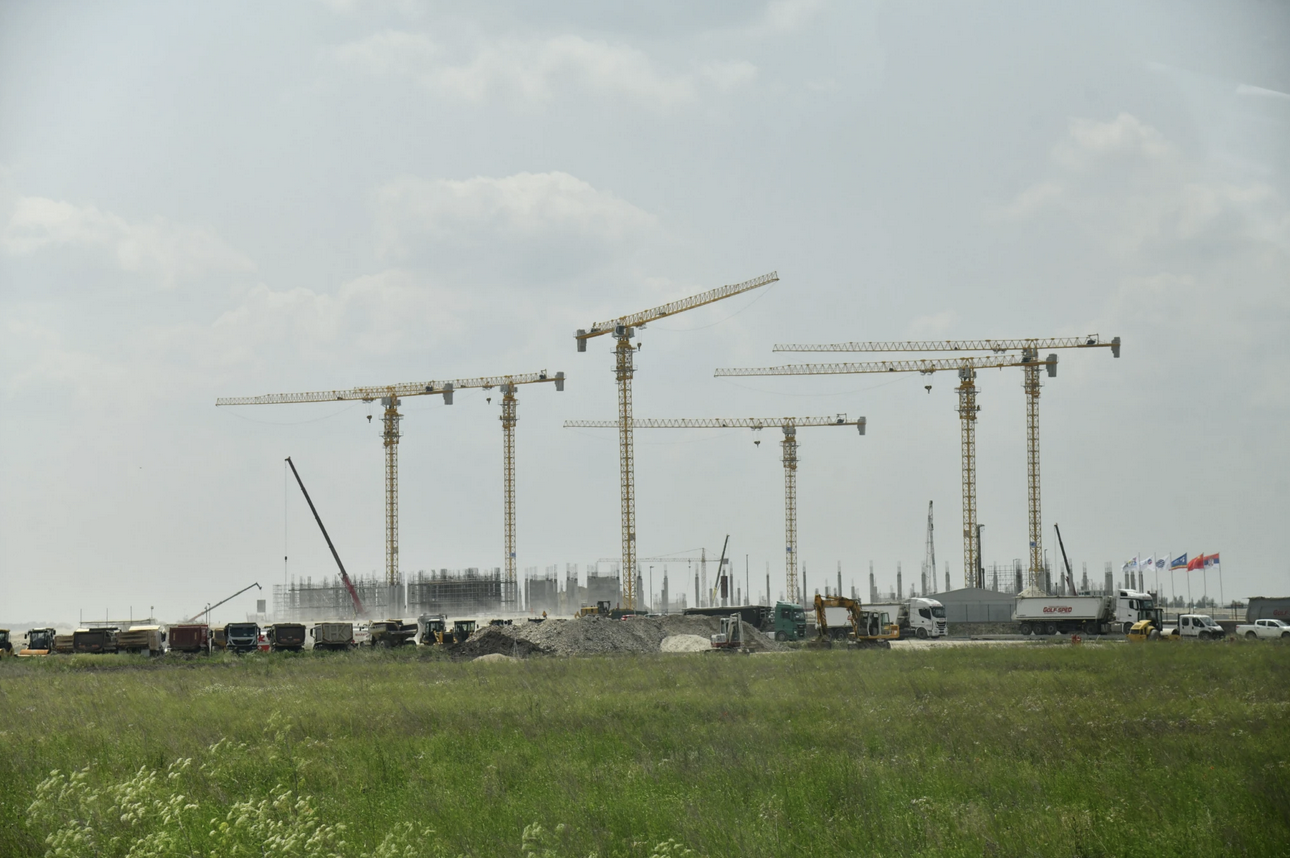
 Construction of the National Stadium on lands purchased back from Al Dahra. (Poto: L.L./ATAImages)Serbian Monitor | 24 October 2025
The land sold to Al Dahra is being repurchased by the state at 13 times the original price
by Snezana Rakic
For the purpose of constructing the National Stadium in Surčin, the Serbian government has bought 26 plots from the Arab company Al Dahra, covering an area of nearly 11 hectares. This is the same land that the government sold to the very same company only seven years ago during the privatisation of PKB, but it has now been repurchased at a price 13 times higher.
As confirmed to Radar by the State Attorney’s Office, the state paid Al Dahra and another Arab company of unknown ownership 720 dinars per square metre for the land. Back in 2018, these same plots were sold for only 55 dinars per square metre.
The construction of the National Stadium, the pavilions for Expo 2027, and other accompanying facilities within that specialised international exhibition has been declared a project of national interest by the government. According to current estimates, the complexes in Surčin will cost more than two billion euros, but it is expected that this figure will rise significantly, as it has become an unwritten rule by which the Serbian government operates.
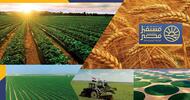
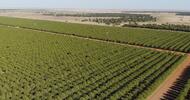
Without a doubt, the Arab company Al Dahra will also profit from these projects. In 2018, during the privatisation of the Agricultural Combine Belgrade (PKB), Al Dahra bought nearly 17,000 hectares of land for just 4,700 euros per hectare – that is, 0.47 euros or 55.46 dinars per square metre. Even then, it was clear that the purchase of PKB by Al Dahra was practically a gift, and how profitable it turned out to be is now more evident than ever.
As stated to Radar by the State Attorney’s Office, for the purposes of constructing the National Stadium, the Republic of Serbia “concluded agreements on compensation for the expropriation of land for the construction of transport, utility, and energy infrastructure facilities, as well as water management facilities, in accordance with the Spatial Plan for the Special Purpose Area of the National Football Stadium, with three legal entities.”
Another Emirati company also sold land to the state
The largest plot – 26 in total – was purchased directly from Al Dahra. It consists of 107,127 square metres, or nearly 11 hectares, located within the cadastral municipality of Surčin. This land was sold by the company from the United Arab Emirates to the state for 720 dinars per square metre – around 13 times more than the amount it had originally paid to the same state for the same land.
This means that Al Dahra sold the land in Surčin for 77,131,440 dinars, having purchased it seven years earlier for only 5,941,263 dinars. In addition to Al Dahra, the state also bought land for the construction of the National Stadium from the company New International Investments at the same price. This firm received compensation for expropriation for two plots with a total area of 3,682 square metres. Radio Free Europe previously reported that part of the agricultural land belonging to Al Dahra was registered as the property of that very company.
When founded, New International Investments listed consulting activities related to business and management as its main line of work. It is owned by Serbia Real Estate Holding, which, like Al Dahra, is registered in the United Arab Emirates. The chairman of the Supervisory Board of New International Investments 011 is Kedaim Abdula Saed Faris Alderei, who held the same position at Al Dahra until April 2022. Radar previously reported that, according to the registry of beneficial owners at the Serbian Business Registers Agency (APR), both companies are registered in Abu Dhabi at the same address, and even have offices on the same floor. It remains unclear whether this company acquired the plots in Surčin through purchase or whether Al Dahra simply transferred ownership to it.
When asked by Radar how many square metres or hectares of land that once belonged to PKB Al Dahra has so far sold to the state or others, and at what prices, the company replied that out of the total purchased land area of around 16,500 hectares, the state had expropriated around 10 hectares. They stated that, to their knowledge, this land would not be used for the construction of the National Stadium.
“When Al Dahra entered the Serbian market in 2018, it purchased part of PKB’s assets, including 16,500 hectares of land. The privatisation was conducted through a public tender, fully in accordance with the privatisation law, which also prescribes the method for determining the market value of the assets subject to the privatisation process,” Al Dahra said.
They declined to comment on their ties with the company New International Investments, from which the state also purchased parcels of land, explaining that they had no information “about private transactions conducted between the state and other companies.”
When asked whether Al Dahra had sold land to the aforementioned company and at what price, they replied that their dealings with other private companies were not of public interest and that they had no obligation “to disclose such details publicly.”
“Al Dahra makes its business decisions based on thorough analyses of all aspects of its operations and projections that contribute to the further development of agricultural activities. As a global leader specialising in agribusiness, Al Dahra has invested more than 85 million euros in Serbia since its arrival, in the revitalisation of existing and construction of new infrastructure, modern machinery, state-of-the-art equipment, and supporting facilities, as well as in the improvement of business processes and production. By doing so, it has significantly exceeded the level of investment agreed upon in the privatisation process, which amounted to 30 million euros. Al Dahra Group remains committed to further expanding its agricultural operations and continuing investments that strengthen its presence and long-term growth in key markets, including Serbia,” reads Al Dahra Serbia’s response.
Interestingly, during the expropriation process, the state also purchased land from the company Agroindustrial Corporation Belgrade, which is almost entirely owned by the Government of Serbia. The state bought parcels from it-covering an area of 13,491 square metres and previously belonging to PKB-at the same price of 720 dinars per square metre. From the same state-owned company and four private individuals, for the construction of facilities for the international exhibition Expo 2027, the state expropriated land totalling 193,204 square metres, but at a price as high as 6,142 dinars per square metre. It remains unclear why there is such a significant difference in price, or in the value of the land purchased for the Expo and the National Stadium, given that the facilities are located in close proximity.
Obvious examples of corruption and theft of public funds
How is it possible that the state has “managed” to repurchase land it sold seven years ago to Arab investors at 13 times the price? Jovan Rajić, lawyer and head of the legal team of the organisation RERI, told Radar that this was not the first time the state had sold land in prime locations, only to buy it back later at multiple times the original price.
“There are not many clearer examples of corruption and direct damage to the state budget, nor of the plundering of citizens’ money, than this one. There is no justification for such conduct, nor any remotely rational or economically sound explanation. The problem is that as a society, because of the sheer number of similar cases, we have become numb to it. We no longer react with outrage; we simply note that it has happened again. The arrogant authorities, likewise, feel no obligation or need to explain such actions, even though they directly contradict the public interest,” said Rajić.
He adds that this is, unfortunately, yet again a matter of the absence of institutions. “If we had a functioning prosecutor’s office – which we do not – if we had courts – which we do not – no one would even think of attempting something like this, let alone actually doing it. I recently heard that in Japan there is no criminal offence for illegal construction, meaning building without a permit, because no one would ever think of building without one. Here, we have nearly five million illegal structures. That is the difference between a state and a territory controlled by an organised criminal group,” concludes Rajić.
That the land sold by the state to Al Dahra was given away “for next to nothing” became clear just a year later, when PKB Corporation, a company that remained state-owned after the privatisation of PKB, advertised the sale of 55 hectares and 87 ares of land in the Komareva Humka cadastral municipality. The minimum price was set at 2.13 million euros, which is 3.8 euros or 448 dinars per square metre – eight times higher than the amount for which the land was sold to Al Dahra.
Circumventing the law for the sake of an Arab investor
Few people disagreed even in 2018 that selling the land to that Arab company was practically a gift. At the time it was sold to Al Dahra, according to Insajder, one hectare of agricultural land in Vojvodina was worth up to 18,000 euros, or 1.8 euros (212 dinars) per square metre. And the controversy was not only about the sale itself, but also about the fact that the government had circumvented its own laws, which prohibited the sale of state-owned agricultural land. To make the sale possible, the transaction was carried out by reclassifying state land used by PKB as its private property. This reclassification was completed in 2015, after the government, then led by Aleksandar Vučić, adopted a conclusion allowing 17,000 hectares of what had been state-owned land to be registered as PKB’s private property. In this way, the legal ban on selling state agricultural land was bypassed, and Al Dahra, as the sole bidder in the tender, purchased PKB’s land, equipment, facilities, and livestock for about 120 million euros.
Vučić, as expected, maintained throughout that everything had been done in accordance with the law. At the beginning of 2019, he stated that the government’s decisions had been approved by the Republic Secretariat for Legislation and emphasised that the privatisation of PKB had been welcomed by the Fiscal Council, the International Monetary Fund, and the World Bank.
“I think what we want here is to have companies that will bring profit to this country, that will pay taxes, rather than the state giving its money to cover losses,” said Vučić, adding that (Al Dahra) “cannot roll up that land and take it away on a flying carpet.”
Land repurchase also due to the motorway to Zrenjanin
It is almost certain that this will not be the end of the state’s purchases of land from the Arab company. The principle of selling land for next to nothing and then repurchasing it later for a much higher price will also apply to the expropriation of land for the construction of the 105-kilometre motorway from Belgrade to Zrenjanin, and later to Novi Sad, as the route will also pass through Al Dahra’s plots.
Construction of the motorway to Zrenjanin began in March last year, and it had already been clear that the state would have to buy back the parcels it had sold to the Arab company for a pittance in 2018. Although the Ministry of Construction, Transport and Infrastructure claimed that the route would be changed, Aleksandar Antić, Director of Corridors of Serbia, confirmed that it would, nevertheless, pass over Al Dahra’s land.
“The motorway route, around three kilometres of it, runs across land owned by Al Dahra. That is less than three per cent of the entire route. And for them, of course, absolutely the same rules will apply as for all other people who own land along the entire route, based on the decision of the competent municipal authority to carry out expropriation,” Antić said last year, though he did not reveal the price at which the land would be purchased.
It is, however, clear that Al Dahra can only profit from this, as the law requires the payment of the market value, which is drastically higher than the price at which the plots were originally sold. Those are the same rules, as Antić himself stated, that apply to all other landowners whose property lies along major state infrastructure projects.
Despite its cheap acquisition, this company from the United Arab Emirates cannot boast of positive business results, as it recorded a loss of 18.5 million euros last year. Nevertheless, it owns significant assets in Serbia. According to official data, it holds more than 1,002 plots and buildings in Besni Fok. In Surčin, it owns 1,013 properties, in Zrenjanin 121 plots, in a studio flat in Novi Beograd, and in Sremska Mitrovica two commercial premises. According to some estimates, the buildings owned by Al Dahra alone are worth around 600 million euros.
It is beyond doubt that, when the balance is finally drawn, Al Dahra’s operations in Serbia will prove profitable – whether through agricultural production or the sale of property that the company effectively received as a gift. The state, on the other hand, will avoid drawing such a balance, as it has, knowingly and repeatedly, driven the public budget into deficit through these large-scale projects. Sometimes this was done for friends from the East, as in the cases of Al Dahra and Belgrade Waterfront, sometimes for partners from the West, such as the Serbian Army’s General Staff building, and sometimes for local allies – businessmen from Serbia close to those in power.
(Radar, 24.10.2025)