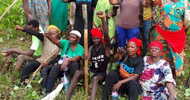
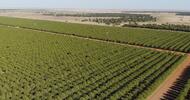
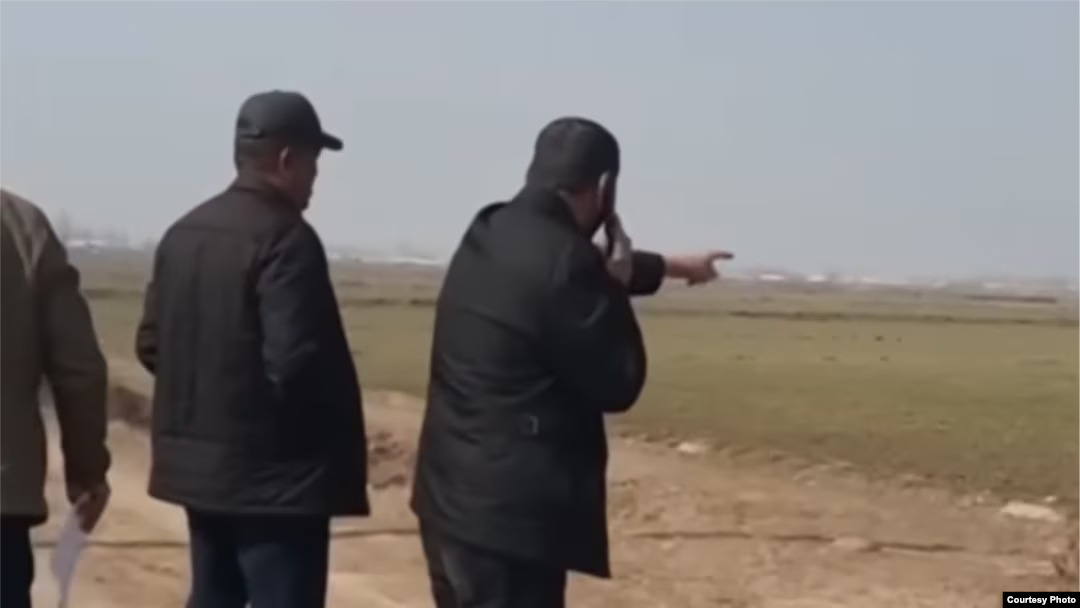
 Farmers in Uzbekistan's Andijan region are concerned that their land is being illegally seized and transferred to Chinese investors.
RFE/RL | 26 Jan 2026
This is a Google Translation of the original
Sadriddin ASHUROV
Merhat SHARIPZHANOV
Tensions are rising in Uzbekistan's Andijan region: farmers say they are being coerced into "voluntarily" handing over their land to local authorities. Many believe the plots will subsequently be given to Chinese investors.
Some of the agricultural land, according to Andijan farmers, was previously leased to Chinese investors.
Officials in Uzbekistan claim that the land transfers are entirely voluntary and legal, and that the plots are not subsequently transferred to foreign owners, whether Chinese or otherwise. However, farmers growing cotton, vegetables, and fruit in eastern Uzbekistan who spoke to Radio Free Europe/Radio Liberty report threats and nighttime visits from officials who pressure them to hand over their lands and deprive them of their livelihoods.
According to the country's law, private ownership of agricultural land does not exist, and farmers lease state-owned land for up to 49 years. The government cannot terminate the lease, except for late rent payments or voluntary land relinquishment.
Reports from RFE/RL's Uzbek Service (Radio Ozodlik), including interviews with farmers, comments from officials, and an analysis of legal documents, show that in Uzbekistan's Fergana Valley, a cotton-growing region bordering Kyrgyzstan and Tajikistan, local authorities are using intimidation and secrecy to force farmers off their land and lease it to Chinese investors for projects.
"They came to my home, forced my wife and me into a car, and took us to the district administration," Zoirjon Gapparov, head of a leading vegetable farm in the Kurgantepa district, told Ozodlik.
The arrival of the police, he said, was part of a pressure campaign that began in December 2024.
"First, [they took me] to the deputy khokim for agriculture, Shukhrat Kamchiev, then to the head of the district. They said the president had ordered the transfer of our land to the Chinese," he said.
Gapparov stated that he refused to comply and sign the land transfer agreement. Following the incident, police and prosecutors regularly visited his cotton fields. He also said that police officers attempted to intimidate his workers into signing statements declaring illegal land leases.
When Gaparov contacted local authorities in September 2025, he was told that his plots had already been redistributed.
"They said I was no longer a farmer, that my land had been given to the Chinese," Gapparov recalls. "They claimed I had no legal documents, even though I had all the paperwork."
NEW CONTROL TRANSFER SYSTEM
Last year, Ozodlik reported that agricultural land in several districts of the Andijan region was being transferred to Chinese companies. Following this publication in April, the land transfers were temporarily halted, but according to farmers, the pressure resumed a few months later.
China is the largest foreign investor in Uzbekistan, accounting for the largest share of foreign capital inflows and new projects. However, the growing Chinese presence has raised concerns among the country's farmers, particularly regarding the priority allocation of agricultural land to foreign investors.
Dilmurod Khodjamberdiev, head of the Kurgantepa district's agricultural department and one of the officials who told Gapparov about the transfer of his land to Chinese investors, told Ozodlik that the land was leased to the Chinese, and they have no ownership rights.
"By government decision, a directorate was created in Uzbekistan, and the land was transferred to this directorate," he said. "The law does not allow the transfer of agricultural land to foreign citizens."
When asked whether Chinese companies had grown anything in the area last year, Khodjamberdiev answered in the affirmative.
"They leased the land from the management, not from me or the district head," he said. "The management can lease the land to anyone it wants. The mayor doesn't decide that."
As part of a government decree adopted in May 2025, such directorates were established in the Andijan region and six others: Jizzakh, Namangan, Tashkent, Fergana, Syrdarya, and Kashkadarya.
The directorate, consisting of five employees, is authorized to monitor the efficient use of land and sublease agricultural land to local or foreign investors "in accordance with the law."
According to the National Statistics Committee of Uzbekistan, as of December 2024, there were 17,900 enterprises with foreign participation in the country, including 4,873 with Chinese capital. The share of Chinese companies is growing rapidly: by the end of 2025, over 1,500 more enterprises were registered.
"VOLUNTARY ON PAPER ONLY"
Other farmers also report situations similar to Gapparov's experience.
Azizakhon Ergasheva, head of the Azizabonu Durdonasi farm, which grows grain and cotton, told Ozodlik that police officers took her from her home at night and forced her to write a statement about handing over 40 hectares of land to "the Chinese" for cotton cultivation.
"I was sick and exhausted at the time. In the end, I signed. It was only voluntary on paper," Ergasheva said.
Khodjamberdiev, head of the district agricultural department, claims that land is only taken away from farmers in debt or from those who have failed to meet production plans.
He named Ergasheva as one of the farmers in arrears. But Ergasheva claims officials deliberately increased her debts by setting unrealistic cotton production targets and creating problems with the drip irrigation project being promoted by the district administration.
"They forced us to sign contracts for 40 centners of cotton per hectare, even though our soil couldn't produce that kind of harvest," explains Ergasheva.
A yield of 40 centners of raw cotton per hectare is considered a high figure in modern cotton growing, according to the Food and Agriculture Organization of the United Nations (FAO).
"We couldn't meet our plan and went into debt. Then the company they recommended for installing drip irrigation took my money and disappeared," Ergasheva continues. "They dug a hole and ran away. And you know what? They were recommended by the district administration!"
Orifjon Kayumov, head of the Kurgontepa District Farmers' Council, a public organization closely tied to the authorities, stated that foreign investors, "including Chinese ones," are currently not working on the expropriated plots.
"Land is confiscated only voluntarily or by court order," he said. "Farmers transfer it to the reserve voluntarily. The mayor has established an agricultural directorate, which now legally owns the land. We'll see what happens in the spring."
Farmers dispute this claim. They say they received no court summonses and were forced to sign documents under duress, threats of arrest, and unexpected police visits to their homes.
Two farmers, who wished to remain anonymous for fear of reprisals, told Ozodlik that they were taken to a police station and forced to sign "voluntary" land transfer agreements.
More than 20 farmers in Ergasheva's area and about 50 across the Andijan region also claim to have lost money to the same irrigation system supplier recommended to her by local authorities.
Ergasheva says that 40 hectares, officially seized "for Chinese investment," were in fact transferred to a wealthy local businessman, Bakhodir Saidaliyev.
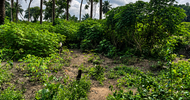
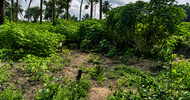
"He came and razed everything I'd built: the orchard, even the mulberry trees where I'd raised silkworms," she claims. "He said he'd plant fruitful cherry trees. Instead, they planted wild ones, which withered. Now the land is overgrown with weeds."