Hubert Fabri and Vincent Bolloré own plantations accused of land appropriation and labor abuses. Their company says it has taken steps to improve matters, but a trip to West Africa shows sexual coercion claims remain widespread.
Financial investors own tracts that grow maize and soya beans in Illinois and Uruguay, almonds and cattle in Australia, and sugar beets and wheat in Poland. Some are venturing into countries with potentially volatile politics, such as Ethiopia and Ukraine.
Teays River Investments, LLC, a big farmland and agribusiness investment company opted to sell two irrigated strawberry and vegetable cropland holdings, purchased just a few years ago, at a $650,000 loss.
- Farmland Intelligencer
-
22 August 2014
A small but growing group of sophisticated investors and bankers are combining crops and the soil they grow in into an asset class that ordinary investors can buy a piece of.
- New York Times
-
22 July 2014
Drought conditions in much of the US this year could turn into a boon, rather than a bust, for institutional investors in farmland, timber and agricultural stocks.
So many Wall Street-types crammed the Waldorf Astoria in New York City last week for a global farmland and agribusiness conference that hosts warned the crowd of 600 not to block the fire exits.
- Progressive Farmer
-
11 May 2011
La résistance de communautés au Cameroun et en Sierra Leone dont les terres sont envahies depuis des décennies par la société d'huile de palme et de caoutchouc Socfin a infligé un coup économique à cette dernière, nous explique le Mouvement mondial pour les forêts tropicales
Bain & Company analysis has identiied four approaches that public companies are taking to invest in agriculture.
- Bain & Co
-
01 November 2016
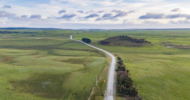
Saskatchewan has some of the richest and least expensive farmland in the world, and there's a gigantic pool of global money that would like to buy up as much of it as they can.
- Globe and Mail
-
24 November 2010
Wary of fluctuations on Wall Street, more wealthy Americans, private funds and foreigners are putting money into parcels of cornfields, fruit orchards and other US agricultural products.
- LA Times
-
19 September 2010
TIAA-CREF is expected to announce Tuesday that it has raised $3 billion for its second global farmland-investment partnership, exceeding its initial target of $2.5 billion.
- Dow Jones Business News
-
04 August 2015
In debate over large scale investments in agriculture in Australia, there are some broader issues about foreign investment that don’t seem to get talked about enough.
In Brazil, El Tejar and others are investing in ownership and hope to capture land appreciation. BrasilAgro brags that it sold one farm for a gain of 116 percent in just 17 months.
Farmers in Saskatchewan are worried that outside investors are artificially inflating land prices and keeping regular farmers from expanding their operations
- Western Producer
-
26 February 2015
Swedish, Norwegian and Dutch investors in Mozambique land grab: powerful new documentary gives a compelling visual portrait of how investment by private financial players can undermine food security and human rights in developing countries.
Indigenous Papuans are reeling from the cut-price sale of the land and forests that are their lifeblood
Plantations et Huileries du Congo, the DRC’s leading palm oil producer, plans to exponentially increase its palm oil production, but this strategy could exacerbate land conflicts.
The notorious reluctance of Australian superannuation funds to invest in agriculture because of perceptions it is too risky, volatile and low-return may be slowly changing, according to key farm and food industry players.
- The Australian
-
21 November 2016
Some liken farmland investment to real estate and infrastructure 20 years ago.
- Economist
-
03 January 2015
Anuradha Mittal, Executive Director of the Oakland Institute, argues that the time has come for a more holistic discussion of land deals that places transfer of land in both the developed and developing worlds along the same continuous spectrum.
TIAA-CREF owns agricultural land in the US, Australia, Brazil and central and Eastern Europe, most of which is leased out.
Wall Street financiers now interested in channeling billions of new dollars into cropland include heavy hitters like UBS, Morgan Stanley and Rabobank.
The PRI for Farmland are supposed to an opportunity for communities and CSOs to assess the performance of investors in farmland against a set of voluntary standards, but fall short of what’s needed to hold companies properly to account.
As 401(k) plan sponsors look to improve diversification and long-term outcomes, real assets such as timber and farmland are moving closer to the center of the conversation, alongside private markets like real estate and private credit.
For decades, communities around the Socfin rubber and oil palm plantations have railed against the company's abusive practices, which range from land grabs to sexual violence. Now their complaints have been vindicated by a surprising source: Socfin's own paid consultants, who have concluded that most of the complaints are at least partially founded, and that the vast majority of the abuses are the responsibility of the corporation.
Quienes actualmente controlan los flujos financieros del mundo no son capaces de apoyar a los productores de alimentos y a los sistemas alimentarios —que pueden combatir la crisis climática o las muchas otras crisis que afectan a la alimentación y a la agricultura. Nuestro desafío es lograr que tanto las tierras agrícolas como el dinero no sigan en sus manos, tan pronto como podamos.
In the next decade, 400 million acres of U.S. farmland will change hands. A land justice advocate sees a timely opportunity to counteract entrenched income inequality and systemic racism.
- Civil Eats
-
24 February 2020
New investigation by Global Witness uncovers more than 300 banks and investors back six of the world’s most harmful agribusinesses to the tune of $44bn.
- Global Witness
-
23 September 2019
San Diego County Employees Retirement Association plans to commit $275 million to $400 million to real assets including agriculture, mining, energy and timber in 2015.
Jeremy Grantham of US asset management firm, Grantham, Mayo, Van Otterloo and Company (GMO), says global investors should have 30% of their portfolios exposed to natural resources, with half of that in forestry and farmland, to take advantage of the growing global food crisis. That is double today's averages.
- Top 1000 Funds
-
03 August 2012