The Australian Greens Greens say the government should be cracking down on foreign investors buying up Australian farms to protect not only the economy but also long-term food security.
- Farm Weekly
-
17 August 2013
Investigation conducted revealed that Equatorial Palm Oil's operation in Bassa is currently experiencing setback owing to the action by the Legislative Caucus via the citizens. As a result, the company is contemplating on a possible pull out.
- The New Dawn
-
14 August 2013
Despite its prohibition on the foreign ownership of land, the Philippines emerged as one of the countries with the largest tracts of farmland that were ceded to foreigners globally, according to the 2013 WTO Report.
- Business Mirror
-
21 July 2013
DESPITE its prohibition on the foreign ownership of land, the Philippines emerged as one of the countries with the largest tracts of farmland that were ceded to foreigners globally, according to the 2013 World Trade Organization (WTO) Report.
- Business Mirror
-
21 July 2013
Reflections on a project to map instances of rural land-grabbing in Tanzania.
- Inidigo Trust
-
11 July 2013
Steep growth in Chinese olive oil consumption, unlikely to be met soon by a budding domestic supply, is encouraging investors to get hold of olive farms and processing plants in producing countries.
Sugar cane and palm oil companies able to afford inflated rents are forcing Guatemala's smallholder farmers off their land.
A land measuring and titling campaign launched and financed by Cambodian Prime Minister Hun Sen lacks transparency and accountability and could leave thousands dispossessed from their land.
The Chinese government has long encouraged businesses to invest in agriculture abroad, and Xi Jinping's first foreign trip as president in the past week involved visits to three African countries.
"I’ve put together a table with what I think are the main Swedish land investments in Russia and Ukraine," writes Brian Kuns. "In doing this, I ran into some of the known difficulties associated with monitoring the phenomenon of large-scale land-acquisition."
In New Zealand, an opposition party is demanding hard figures on how much farmland is owned by foreigners, but the government says it can't produce the figures.
Rural land produced some of the best investment returns in Europe since the financial crisis began five years ago, appreciating by 51 percent across England
With the coming of big industrial farms in Ethiopia, local people, villagers and pastoralists are being threatened, intimidated, forcibly displaced and herded into camps by the military, their homes destroyed.
- Redress Information & Analysis
-
01 Mar 2013
Thousands of Punjabi farmers have bought land in distant Georgia lured by cheap prices, angering some locals.
- Al Jazeera
-
21 February 2013
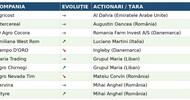
As much as 10% of Romanian farmland could be in the hands of multinational businesses, but there are no official statistics to establish the full extent of the corporate takeover.
The controversy regarding India’s permission to allow foreign direct investment in multi-brand retail and growing “land grab” in Africa by multinational corporations are being closely watched globally by agriculture experts, researchers and donors.
- The Hindu
-
19 December 2012
“Moving beyond misconceptions: Korean investment in Cambodia” is a series of three reports. It comprises a critical review of Korean investment in Cambodia as well as two extensive investment case studies, one in mining (Kenertec) and the other in agri-business (MH Ethanol).
- Heinrich Böll Foundation
-
19 December 2012
A heated debate ensued yesterday in Tanzania's Parliament after Kawe lawmaker Halima Mdee moved a private motion calling on the House to adopt a resolution pressing the government to suspend the allocation of huge chunks of land for investment to foreigners.
- Guardian
-
09 November 2012
The problems of access to land for women and communities have been worsened by the land grab perpetuated by multinationals and society's wealthy.
The New South Wales Farmers Association, in Australia, has switched policies to back much tighter restrictions on foreign companies and investment funds buying Australian farmland.
- The Australian
-
16 October 2012
One of the greatest threats Africa has ever faced is the impact from this new phenomenon of land-grabbing
- AllAfrica
-
21 September 2012
February 2012 workshop in Ouidah, Benin brought together over thirty participants from farmer organisations and NGOs in West and Central Africa to share experiences and analysis of land grabs.
Social organisations are shocked and offended by a Wall Street Journal article written by the FAO Director General and EBRD President that calls on governments to embrace corporations as the main engine for global food production.
- La Via Campesina, GRAIN, FOE et al
-
14 September 2012
IFAD President, Dr Anayo Nwanze, while speaking at a forum in Abuja, on Sunday, said that the term land grab gave an impression that the people’s land were being taken over without their consent.
- Daily Times
-
27 August 2012
The Indonesian government’s long-discussed plan to launch a massive food estate in Merauke, Papua, in a bid to boost the nation’s food production is facing uncertainty amid land acquisition problems, a top ministry official says.
- Jakarta Post
-
12 July 2012
The AgriSol investment is a good case in justifying that in Tanzania it is the state which grabs on behalf of the investors as opposed in other areas where land is acquired illegally.
The land grab phenomenon in Sudan...resembles a fata morgana, a mirage in the desert which completely distorts the object on which it is based
The Gillard Government (Australia) has announced a working group to consult on the development of a Commonwealth foreign ownership register for agricultural land.
Multinazionali e governi stranieri stanno correndo ad accaparrarsi terre in Africa, per garantirsi cibo e biofuel. Il nuovo colonialismo avanza e minaccia centinaia di milioni di contadini
Six foreign-owned companies are currently trying to secure over 1 million hectares (about 2.5 million acres) of land for the production of palm oil in the country's forested southern zone, according to a coalition of environmental organisations.