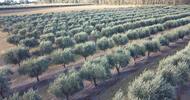
China has backed turning northern Australia in to a food bowl for Asia saying the free trade deal will aid Chinese investment in farms in the region.
- Australian Financial Review
-
18 June 2015
Le gouverneur de la région russe de Transbaïkalie a confirmé que le contrat avec l’entreprise chinoise Zoje Resources Investment pourrait être signé début 2016.
- Courrier de Russie
-
17 June 2015
Les investisseurs privés chinois pourront injecter jusqu'à un milliard de dollars australiens sans feu vert préalable du conseil de surveillance des investissements étrangers, avec quelques exceptions pour les terres agricoles et les entreprises agroalimentaires.
El papa Francisco denunció este jueves el acaparamiento de tierras por parte de multinacionales y Estados en los países pobres, y recomendó apoyar la agricultura familiar de subsistencia, durante un encuentro con una delegación de la FAO.
Zoje Resources Investment has obtained a 49-year land lease from Russia's Transbaikal regional government to develop agriculture and livestock farms on 115,000 hectares of uncultivated land.
A 3,000 ha Chinese-invested agricultural park was inaugurated in Tbong Khmum, aiming at broadening agricultural cooperation between the eastern Chinese city of Zhangzhou and Cambodia.
The project, aimed at broadening agricultural cooperation between the eastern Chinese city of Zhangzhou and Cambodia, covers an area of 3,000 hectares and 11 Chinese companies have registered to invest in it
China y Rusia (Presidentes Xi Jinping y Vladimir Putin) establecieron en Moscú el 9 de mayo (aniversario de la finalización de la Segunda Guerra Mundial) un Fondo Agrícola de Inversión con un capital de U$S 2.000 millones.
Neither “global land grab” nor “South-South cooperation” discourses do justice to the complexity we witness since Chinese investments in the Brazilian soybean agribusiness have begun taking shape in recent years.
Of the 600 hectares of farmland that KAI has cleared and prepared, roughly 250 hectares will be dedicated to the chia, with sweet sorghum to be planted next.
China's largest grain trader COFCO is setting up a venture with sovereign wealth fund China Investment Corp (CIC) to control COFCO's investments in Dutch trader Nidera and Noble Group Ltd's agribusiness.
The water-rich region of Myanmar has become the target of land speculation, driven in part by local Myanmar-Chinese merchants and Chinese speculators and businesspeople.