Reuters | 20 November 2025
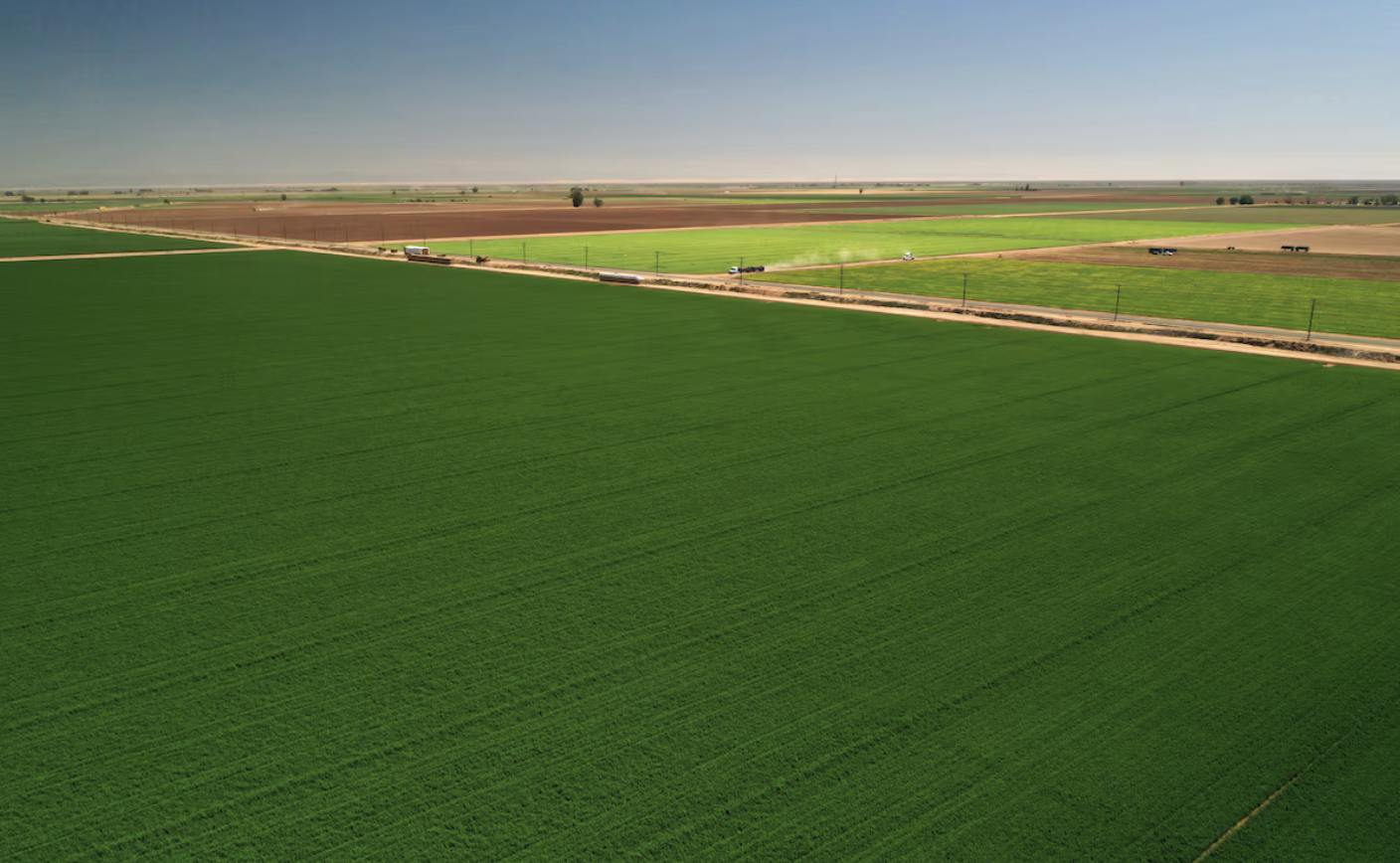 A general view of irrigated farmland in Holtville, California, U.S., May 29, 2020. REUTERS/Bing Guan/ File Photo Purchase Licensing RightsForeign ownership of agricultural land comes under new scrutiny
By Margaret Krawiec and Todd Kelly
Commentary Attorney Analysis from Westlaw Today, a part of Thomson Reuters.
Introduction
Foreign ownership of agricultural land, once a relatively innocuous regulatory area, has come under scrutiny in recent years as state and federal lawmakers have sought to impose tighter restrictions by passing new laws or amending existing ones. President Trump has also focused attention on the topic, positioning it as an urgent national security threat. Adding to the uncertainty, state laws are being challenged with some courts suggesting they may be preempted by federal law.
The result is that any individual or entity looking to acquire or sell agricultural land who may be subject to foreign ownership laws should be sure to carefully review, and stay up to date with, the relevant federal and state laws governing that transaction.
Federal law
AFIDA
The primary federal law governing foreign ownership of agricultural land is the Agricultural Foreign Investment Disclosure Act of 1978 (AFIDA). AFIDA is strictly a reporting statute for collecting information; it does not prohibit foreign ownership of land.
AFIDA requires that "[a]ny foreign person who acquires or transfers any interest ... in agricultural land shall submit a report to the Secretary of Agriculture not later than 90 days after the day of any such acquisition or transfer." The foreign person is required to provide their name, citizenship, the type of land, acreage, and purchase price for the transaction, among other information.
Past practice has been for the foreign person to file a Form FSA-153 in the county office where the land is located, or if it was a complicated filing, to seek permission to file directly with U.S. Department of Agriculture. However, as discussed below, USDA has now been instructed to implement an online portal to streamline reporting and increase transparency.
USDA publishes an annual report of foreign holdings of agricultural land based on AFIDA filings. Based on the most recent report, as of December 2023, foreign persons held an interest in approximately 45 million acres of U.S. agricultural land, which accounts for 3.5% of privately held agricultural land and 2% of all land in the United States. Agricultural land under AFIDA would include all tracts of land larger than 10 acres that have been used for farming, ranching, or timber production in the past five years.
Foreign ownership of U.S. agricultural land has trended upwards in recent years. From 2012 to 2017, foreign interests increased by an average of only 0.6 million acres per year; however, during 2017 to 2023 that number increased to nearly 2.6 million acres per year.
The states with the largest amount of foreign-held agricultural land as of 2023 were Texas (5.6 million acres), Maine (3.5 million acres), and Colorado (2.5 million acres). Canadians owned the largest percentage of foreign-owned land (33%), followed by owners in the Netherlands (11%), Italy (6%), the United Kingdom (6%), and Germany (5%).
Countries often at the center of discussions about restricting foreign ownership of land — China, Iran, North Korea, and Russia — all account for less than 1% of foreign-held agricultural land.
While AFIDA is primarily a reporting statute, it does impose penalties for failure to comply. Foreign persons who fail to file, who submit incomplete reports, or who report false or misleading information may be subject to fines of up to 25% of the value of their interest in the land. Persons who file late may be penalized 0.1% of the value of their interest for each week the violation continues, capping at 25%. Over $1.2 million were assessed in penalties in 2024, nearly all for late filings. This was the largest penalty amount in any given year to date.
National farm security plan
The Trump Administration has framed foreign ownership of agricultural land as a national security threat and stated an intent to strengthen prohibitions as well as potentially find means to force divestiture. In July 2025, Agriculture Secretary Brooke Rollins released the Administration's National Farm Security Action Plan (the "Plan"), which is intended to "address U.S. foreign farmland ownership from adversaries head on. Total transparency. Tougher penalties."
The Administration plans to accomplish its goals by making AFIDA a priority. Among other objectives, the Plan includes several action items directly related to AFIDA and foreign ownership of agricultural land:
•Reforming AFIDA process: The Administration plans to "aggressively implement" AFIDA reforms, including creating an online filing system, requiring "enhanced" reports including additional information such as the purpose of land purchases, and increased civil penalties.
•Online portal: USDA rolled out a new online portal for people to anonymously report potential AFIDA violations. The portal invites "farmers, ranchers, and general members of the public to report possible under or failed reporting and compliance with respect to [AFIDA]."
•MOU with CFIUS: Along with the Plan, USDA released a memorandum of understanding with the Treasury Department to clarify USDA's role on the Committee in Foreign Investment in the United States ("CFIUS"). The MOU follows the Consolidated Appropriations Act of 2024, which included a provision authorizing USDA to participate in CFIUS reviews of relevant transactions. The MOU provides detail on information sharing between USDA and CFIUS and when USDA will participate in CFIUS reviews.
In addition to the specific action items, the Plan shows that the Trump Administration has made the foreign ownership of land a focus. Whereas past administrations may have been lax about reporting requirements, foreign persons purchasing or selling land should be sure to strictly comply with AFIDA in light of the increased attention.
Congress
Congress also has set its sights on foreign ownership of land and AFIDA reporting requirements. There are multiple bills currently being considered which would strengthen the AFIDA process and potentially increase penalties for certain filers. The bipartisan Farmland Security Act of 2025 currently before Congress would require USDA to conduct additional annual audits of AFIDA disclosures and provide training to state and county employees to identify land that has not been reported.
The bill would also change the penalty provisions of AFIDA to penalize shell corporations 100% of the fair market value of an entity's interest for reporting violations that are not remedied within 60 days. The bill would also require USDA to conduct research on foreign investments in agricultural land and provide its findings to Congress.
Additionally, the Agricultural Risk Review Act has passed the House and is currently with the Senate. It would require the Secretary of Agriculture be included as a member of CFIUS with respect to transactions that involve agricultural land, agricultural biotechnology, or the agricultural industry. It also requires CFIUS to make a determination on whether to initiate a national security review when USDA notifies it of certain "reportable transactions" involving foreign persons from China, North Korea, Russia, or Iran.
State law
There has been considerable movement in the states related to foreign ownership of agricultural land in recent years. There are now 28 states that have some restriction or prohibition on foreign ownership. Many of these laws have been passed or strengthened in the past few years.
The laws across states are not uniform. Some only require additional reporting, some have restrictions on land near military sites, some only apply to "foreign adversaries," and some ban certain individuals from acquiring or holding any land.
In 2023, Arkansas became the first state to force divestiture of land pursuant to a law restricting foreign ownership of agricultural land, ordering a Chinese state-owned agricultural technology company to pay a $280,000 civil penalty and to divest itself of land holdings in the state. Other states may follow suit, and the Trump Administration has stated in the Administration's National Farm Security Action Plan that it will work with states to take action "to end the direct and indirect purchase or control of American farmland" by nationals of foreign adversaries.
There have been several legal challenges to state laws restricting foreign ownership of land. Some courts have suggested that these state laws could violate the Supremacy Clause by preempting the federal government's interest in regulating foreign affairs. In particular, the state laws may conflict with the Foreign Investment Risk Review Modernization Act (FIRRMA), which created CFIUS.
In Florida, plaintiffs challenged a law prohibiting Chinese citizens from purchasing real property (Shen v. Simpson). The plaintiffs argued the law violated the Fourteenth Amendment's equal protection guarantee and the Fair Housing Act, and that it is preempted by federal law, namely FIRRMA. The district court denied the motion. However, on appeal the 11th U.S. Circuit Court of Appeals granted a preliminary injunction, finding a likelihood of success on the preemption claim.
Two sets of plaintiffs challenging Arkansas' restrictions on foreign ownership have been granted similar injunctive relief by district courts (Jones Eagle LLC v. Ward and Arkansas Cryptomining Association v. York). However, in Texas a district court dismissed a challenge to a Texas law regulating foreign ownership, finding that the law did not apply to the plaintiffs (Wang v. Paxton).
Conclusion
Foreign ownership of agricultural land is increasingly under scrutiny on both the federal and state level. Due to the current state of flux at the federal level and evolving patchwork of laws at the state level, any foreign person or foreign-owned entity should be sure to stay current on developments and to closely review updated federal and state regulations before acquiring or selling any agricultural land.