 Association of Women Neighbouring Socapalm Edéa (AFRISE)WRM Bulletin 278 | 7 April 2026
Traditional communities, and especially women in these communities, have been denouncing for decades the serious violations which Socfin, the multinational corporation operating rubber and oil palm plantation operations in several West-African countries inflicts on them. The mobilizations, and the unwavering resistance of women in the communities whose lands have been invaded by Socfin recently dealt a severe economic blow to the company. In February 2026, the Norwegian state pension fund, the world's largest sovereign pension fund, sold its stake in the Bolloré Group, one of the main shareholders of the Socfin Group. The Norwegian pension fund’s move follows a similar decision by Switzerland's largest pension fund, BVK.
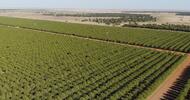
The Socfin Group was founded in 1909; it controls among others, approximately 370,000 hectares of land in eight African countries and two Asian countries for the production of oil palm and rubber trees. (1) The list of accusations against various Socfin subsidiaries in these countries is long and serious: land grabbing, sexual violence against women and girls by company workers and men working as guards in the plantations, restriction of the freedom of movement of communities surrounded by plantations, harassment, violence, intimidation, as well as contamination of waters and soils.
For all these reasons, the Association of Women Neighbouring Socapalm Edéa (AFRISE), is emphatic about the Norwegian fund's decision: "It's about time that investors take action against Socfin and Bolloré". The call was made in a collective press release, signed by 32 organizations, to publicize the decision of the Norwegian state pension fund and encourage other investors to follow similar paths. (2)
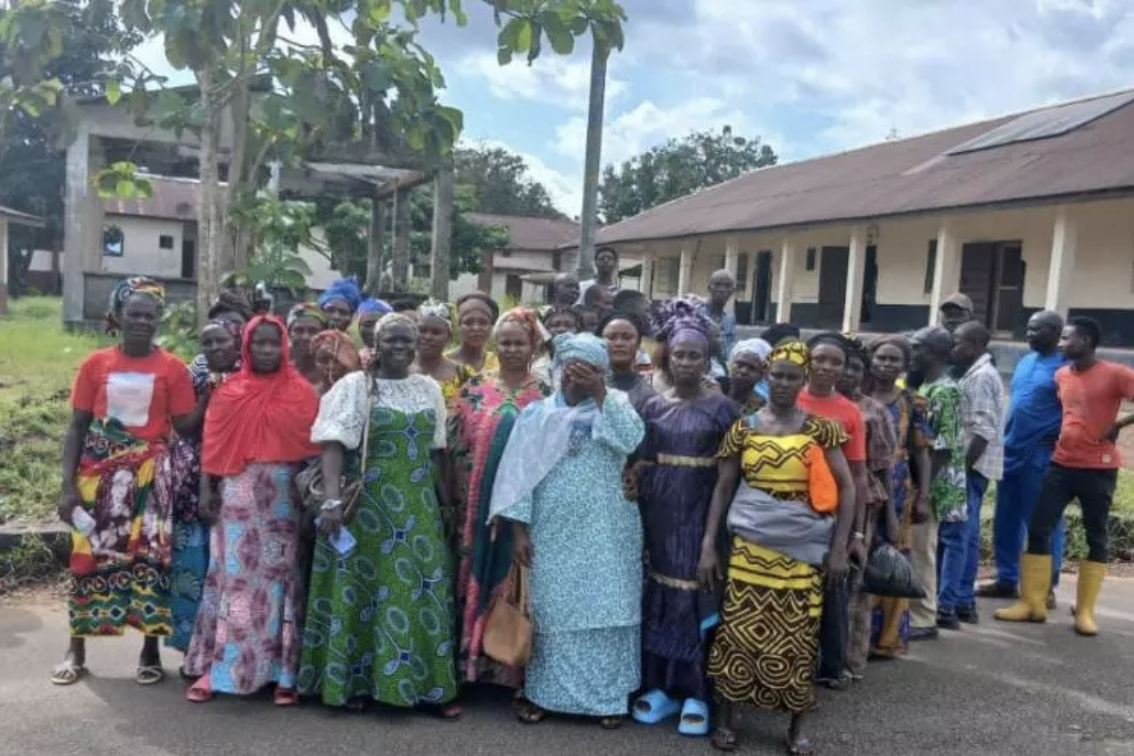
The women of AFRISE know what they are talking about. AFRISE has been organizing for years to resist the violations that women suffer on their own lands at the hands of representatives of Socfin's Cameroonian subsidiary, Socapalm. Socapalm, certified by the international certification scheme Roundtable on Sustainable Palm Oil (RSPO) despite all the accusations against it, controls nearly 60,000 hectares of industrial oil palm plantations in Cameroon. Much of this area was illegally seized or forcibly taken from traditional communities. This is the case of the community of Apouh à Ngog, in Édea. There, Socapalm has for more than 40 years been occupying lands it took over from companies dating back to colonial-era land grabs in an irregular manner. (3)
In 2023, AFRISE launched an international petition as part of a campaign to reclaim its territory and prevent Socapalm from renewing its oil palm plantations around the homes and ancestral graves of the community. (4) At the time, the women of the organization stated: “We don’t have life here. Because life without land is nothing. We want the land to survive”, and they conclude: “We live like foreigners on our own land. They have freedom but we are not free”. (5)
The consequences of this are harsh, especially for women, who traditionally use many parts of the oil palms and for whom palm oil processing is a traditional and essential practice that helps women to support their families. “We women are being abused by this company, we're really being abused because the state of our daily lives, the situation that leaves us weakened, pushes us to go into the plantations to fetch fallen nuts”, denounces AFRISE. In a letter sent to the President of Cameroon at the time, as part of that same campaign, the women of AFRISE described the gravity of their situation: “We negotiate entry into the plantation by handing over our bodies to the Socapalm guards, who make this a condition to access the land. As lifelong thieves and sex slaves for generations, we have lost our dignity as women by losing our most basic rights. We are regularly victims of many other abuses and violence due to the presence of this company on the land of our ancestors”. (6)
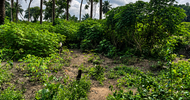
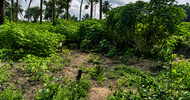
With no institutional response to its demands, AFRISE decided to take the struggle for its territory in its own hands. In January 2025, the women planted food, such as bananas and beans, on approximately 35 hectares of land they reclaimed after Socapalm had cleared the land to renew its plantation. A few months later, the company sprayed the banana seedlings and other plants the women had planted with chemicals. Shortly after, the company returned, under the protection of dozens of armed soldiers, to continue replanting. With determination and broad international support, the community blocked heavy machinery and withstood heavy repression by armed forces until authorities and armed forces of the Government of Cameroon stepped in to defend Socfin's interests. (7) The community may have had to retreat from the area they had retaken, but the struggle of these women continues.
The violations the women of Apouh à Ngog face on a daily basis are far from an exception. Many women in other countries live in similar situations and have also risen up to defend their rights and denounce the Socfin Group and the violations linked to the companies’ plantation operations. (8) Among them are the women of Malen, in southern Sierra Leone. Since arriving in the region in 2011, Socfin has leased land on a large scale through a violent process that has impacted approximately 52 communities and over 32,000 people living in the area. Where communities once lived, today there are more than 12,000 hectares of oil palm plantations. (9)
Hannan Deen, Chairlady of the Malen Landowners and Users Association (MALOA), recalls a time of dignity and self-reliance, when they lived peacefully and had enough food from their farms. But since the land was taken by Socfin, life, especially for women, has become very difficult. “At one point we even considered relocating because we feared for our safety but instead of leaving, we decided to stay and organize. That's how we formed MALOA to defend our rights”, Hannan Deen explains in a documentary produced in partnership with the organization Women’s Network Against Rural Plantations Injustice. (10) In that same video, Aminata Faba, a community leader, explains that one of MALOA’s main activities is to raise awareness about the Land Rights Acts, a piece of legislation adopted by the government of Sierra Leone in 2022 which strengthens community rights to land. Aminata Faba recalls how the refusal of her village chief to sell the community's lands was instrumental to their struggle. "No land for sale!", he reportedly said, and because of that, he was arrested and the government accused him of treason. As the women explain in the documentary, this happens to many landowners who refuse to sell or rent out the land to the multinational corporations: they are coerced, sometimes by physical force, into giving up their land for the company's oil palm plantations.
Standing up against the interests of a multinational like Socfin can be intimidating, especially when you are a woman. The documentary includes accounts of several women from Malen who are standing up for the rights of their communities and for women who faced harassment and abuse while working for Socfin. The company's response has always been the same: denial of any wrongdoing, persecution and criminalization of individuals.
Aminata Sowa, former Town Chief of Sinjo Malen, talks of moments of tension after raising her voice against injustices perpetrated by Sofcin, and of having to overcome fear: "I have been suspended [from my position] simply for standing up for justice and advocating for the rights of our women". And she continues: “I learned that those opposing the company we have been listed for public flogging. Fearing for my safety I fled Malen. I left my children behind; this separation caused my family to suffer greatly”.
Gadi Rut Maguna had a similar experience. She was the Human Resource Secretary and Gender Chairlady at the Socfin subsidiary in Sierra Leone. After defending the rights of female workers, she was questioned by her superiors about ‘which side she was on’. Her reply: "Yes, I work for Socfin, but I stand with the workers because I am one of them.[…] If I fail to defend their rights it will affect all of us now and in the future”. Gadi Maguna recounts that women’s work was exhausting, and that they do not have guaranteed rights. “As Gender Chairlady, I also had a duty to the many women affected. I stood my ground, I demanded justice for the workers”, she explains in the documentary. She was fired and, after taking legal action against Socfin demanding her labor rights, was sued by the company. She was even arrested and had her release conditioned on her dropping the charges, but she refused and remained steadfast in her pursuit of justice. After being detained for eight days, women in the region mobilized in her support, which in turn led to her release. Socfin is still pursuing the lawsuit against Maguna which has been dragging on for 5 years.
In Malen, as in Apouh à Ngog, the main struggle of the women is for land. Jenebra Samai, a local resident who was beaten for defending interests contrary to those of Socfin, recounts: "Since our lands were grabbed, life has been extremely tough". She helps us imagine the gravity of what they experience daily: “Imagine some kids came on holiday, they went and picked some palm fruits to eat and they are caught in the process, they are beaten, including their mothers”. Commenting on how women are pushed into collecting oil palm fruits left on the ground inside the plantations after harvesting – an action that the company and state authorities have declared illegal and which is causing violence and abuse across the Socfin plantations in West and Central Africa. “Because if you don’t eat for days, what will you expect?”, she explains. The documentary, features the stories of several people who were arrested and assaulted for harvesting palm oil in areas that Socfin claims belong to the company. Jenebra spells out what many whose lands have been taken over by Socfin experience: "In Malen, it is unbearable". “We have no bush, no means of survival and nowhere to go”, she explains.
The Socfin Group has been working to distance itself from these allegations. To that end, it even hired Earthworm, an NGO specializing in cleaning up the image of companies implicated in rights violations as bad as Socfin’s. Earthworm’s reports list and acknowledge some of the reported conflicts, without doing anything tangible to solve them. (11) Socfin’s strategy behind hiring Earthwom seems, above all, to have been to buy time, to create the impression that something is being done, and by appearing to take action to address the long-standing conflicts with communities, to avoid or at least delay shareholder action, such as the Norwegian state pension fund’s decision to sell its share in the Bolloré company because of the ongoing conflicts with communities.
In Liberia, too, Socfin subsidiaries have been causing long-standing conflicts with communities over land. Earthworm also prepared a report on conflicts between the Socfin subsidiaries Salala Rubber Corporation (SRC) and Liberia Agriculture Company (LAC) and communities affected by the SRC and LAC plantations. "The reports describe progress that simply does not exist", one community leader said of the Earthworm reports for the years 2024-2025. “What we experience daily is abuse, neglect, and intimidation”. (12)
“For too long, the Bolloré Group has claimed it's not responsible for the abuses we face around the Socfin plantations and as a result, the abuses have continued. This cannot go on”, AFRISE demands in the collective press release in reaction to the Norwegian state pension fund’s decision to sell its shares of the Bolloré Group. Responsibility for the conflicts also falls to the majority shareholder of Socfin, the Hubert Fabri family from Belgian – together, Bolloré Group and Fabri hold 93 percent of the multinational's shares.
Referring to the struggle of the women of Malen, and echoing many others fighting for their rights violated by Socfin, Aminata Sowa states: “We now understand: land is life. We are being punished for defending this truth”. Women will continue to fight for their rights and their territories, call on international investors and funders of the company to fill their corporate policies with life and stop financing and profiting from companies that violate community rights and women’s bodies and rights to land.
WRM International Secretariat
References:
(1) The Socfin Group has a presence, through various subsidiaries, in the following African countries: Cameroon, Ivory Coast, Ghana, Nigeria, Sierra Leone, Liberia, Democratic Republic of Congo, and São Tomé and Príncipe. And in the following Asian countries: Cambodia and Indonesia. For more information Socfin.com
(2) Farmland Grab, 2026. Norwegian pension fund dumps Bolloré for human rights violations at plantations
(3) WRM, 2024. Cameroon: Resistance against SOCAPALM replanting operations is fertile!
(4) WRM, 2023. Your support is needed! Sign this petition by women in Cameroon resisting industrial oil palm plantations
(5) WRM, 2023. Cameroon: Testimony of women who reclaim their land back
(6) Farmland Grab, 2023. Letter from the women neighbouring Socapalm Edéa to President Paul Biya
(7) WRM, 2025. Comunidades se levantam contra a apropriação de terras e a violência do Estado
(8) WRM, 2020. Violence and Sexual Abuse Against Women in Oil Palm Plantations. YouTube;
and Bloomberg, 2025. The Rubber Barons;
and La responsabilité des multinationals, 2025. Exploitation sexuelle, expulsions et pollution autour des plantations de Socfin
(9) Fian, 2019. Land Grabbing for Palm Oil in Sierra Leone - Analysis of the SOCFIN Case from a Human Rights Perspective
(10) Women´s Network Against Rural Plantations Injustice and Spaceman Media Consortium, 2026. Watch the video here
(11) WRM, 2025. NGOs at the service of plundering territories: the Earthworm Foundation case
(12) Verity News, 2026. Liberia’s Plantation Communities Slam Socfin Reports as “False Progress,” Say Abuses by SRC, LAC Continue Unchecked